This piece grew out of our time at Network School through July, the month-long startup society pilot we organized in Japan in August, and Ryu’s role as a director of Colive Fukuoka’s Builders Program in October.
It sits alongside Is Japan Ready for a Network State? by our friend Parallel Citizen as a companion piece. We shared the pop-up experience in Japan and came away with different but overlapping questions about culture, belonging, and what it takes to build places worth caring for. Parallel Citizen explores how network-state ideas might take root in Japan’s existing communities and culture. We approach these questions through the everyday work of building and sustaining a community, reflecting on craftsmanship, what we pass on, and the places we want to build together.
What We Learned in the Kitchen
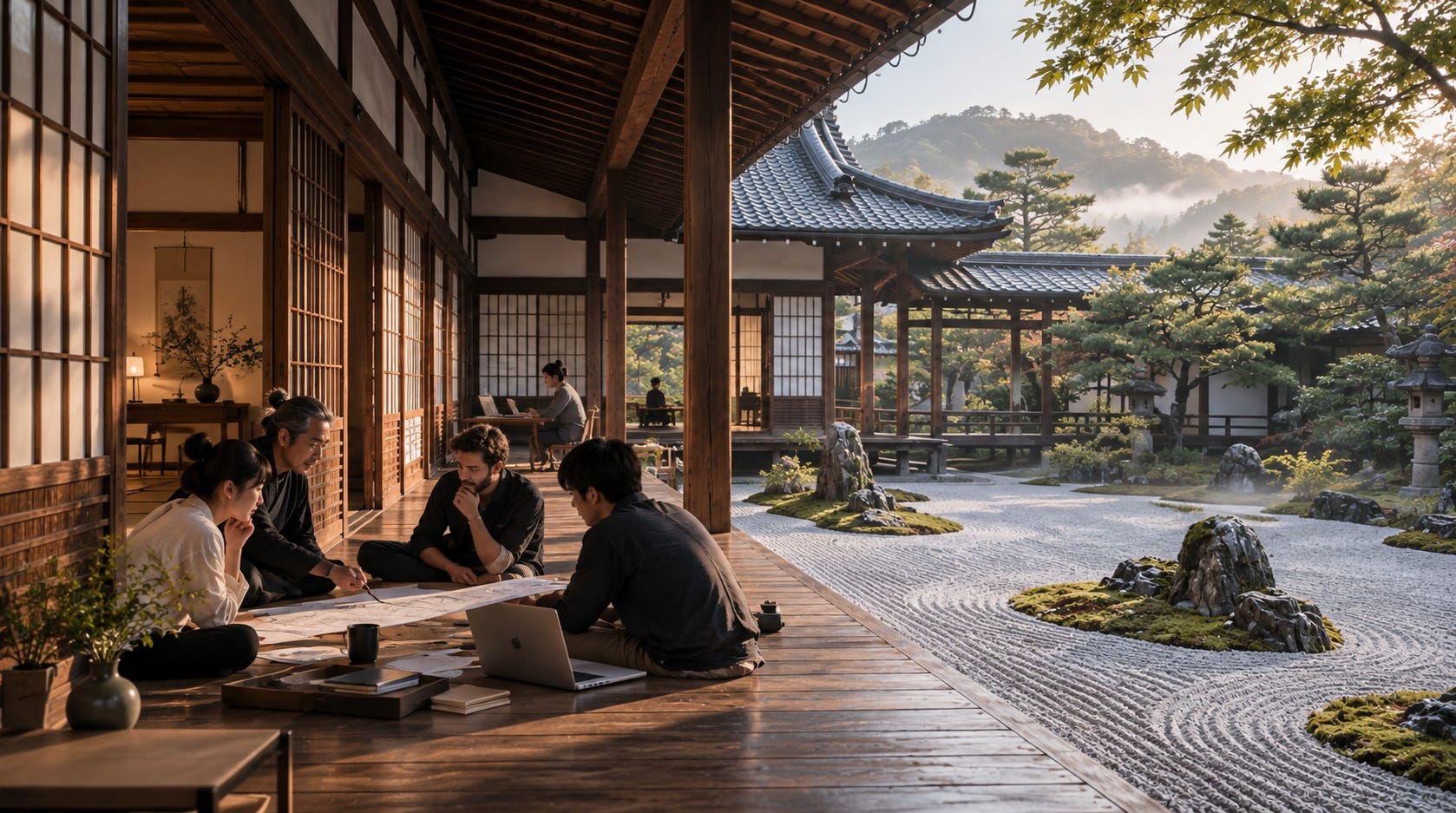
Six in the morning. Cool mountain air drifts into a kitchen that’s still half asleep. Steam rises from the pots. Knives tap against cutting boards. The smell of breakfast fills the room.
Cooking, cleaning, keeping daily life running. These may seem like ordinary tasks, but they’re often where the realities of community become most visible. Someone needs to cook. Someone needs to clean. Someone needs to notice what’s missing and make sure it gets done.
There’s something beautiful about people stepping in to help one another. But beneath that beauty lies a question we can’t afford to overlook. Did everyone genuinely choose to take on that work? Or did someone simply feel it had to be done? Could they have said no without feeling they were letting others down?
When we talk about building a community together, the line between voluntary contribution and unspoken obligation can become surprisingly difficult to see.
We came face to face with that question while organizing Zō Village, a month-long startup society pilot in Japan. People from different countries and backgrounds came together to live, learn, and create. We believed in what could happen when people from different worlds shared a place and a purpose, and some of the relationships that emerged were more meaningful than we could have imagined.
At the same time, as we took on much of the work required to keep daily life running, we found ourselves increasingly exhausted. When something needed doing, we did it. When a problem arose, we tried to solve it. Because we cared about the place and the people in it, we kept finding reasons to give just a little more. Without quite realizing it, we were taking on more than we could sustain.
When participants saw how much we were carrying, many stepped forward to help. Their thoughtfulness, generosity, and willingness to act remain among the things we treasure most from that experience. But their kindness also brought something into focus.
A community should not depend on people continually stretching themselves beyond what they can sustainably give. No matter how compelling its vision, something is missing if the people sustaining everyday life are quietly wearing themselves out.
As we think about what comes next, we don’t want to repeat that pattern. We’re no longer asking only what kind of community we want to create. We’re asking what kind of structure would allow that community, and the people within it, to thrive over time.
That question has become our starting point.
Good Intentions Need Good Structures
When we imagine new forms of society and community, we often speak about freedom, trust, autonomy, and co-creation. These values matter deeply to us. But declaring a community free doesn’t automatically make its members free. Calling for trust doesn’t necessarily create the conditions in which trust can grow.
Even the warmest invitation to help one another can gradually become an expectation that everyone must contribute in a particular way. What begins as generosity can become an obligation that nobody quite knows how to refuse.
We don’t want to question people’s goodwill. We want to protect it. And that means creating structures that don’t depend on goodwill alone.
What does the organizing team take responsibility for? What is expected of participants? Who makes decisions? Who carries out the work? How are people compensated, and when do they get to rest? Most importantly, can someone say, “I can’t do that,” and know their answer will be respected?
Clear responsibilities and boundaries don’t have to make a community less human. They can make it safer to participate wholeheartedly. A contribution is only truly voluntary when declining is a real option.
But structures alone aren’t enough. We also need a shared understanding of what matters to us and why we’re building together in the first place. That understanding becomes especially important when things don’t go as planned, when priorities compete, or when people disagree. It gives us something to return to as we make decisions, question our assumptions, and find our way forward together.
People who care for others need care themselves. People who take pride in their work need a way to sustain their livelihoods. And nobody should have to earn the right to belong by proving how useful they are.
We don’t want to build communities that consume people’s generosity. We want to create places where generosity can arise freely, be received with gratitude, and continue to circulate.
The Art of Making Something That Lasts
There’s a scene in the Swordsmith Village arc of Demon Slayer: Kimetsu no Yaiba that has stayed with us. Amid the chaos around him, a swordsmith remains completely absorbed in sharpening a blade.
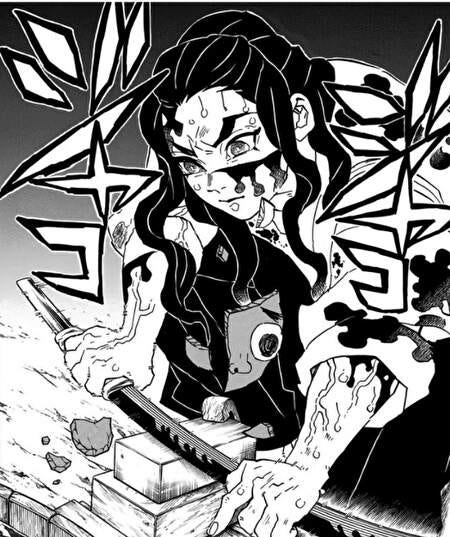
What struck us was the quality of his attention. He seems devoted to something beyond simply finishing a sword: bringing out everything the blade can offer, so that whoever carries it can protect others and help make a future possible for those who come after them.
There’s pride in that work, but also a responsibility that reaches beyond the work itself. Honor what has been entrusted to you. Give the task before you your full attention. Then pass something worthy onward.
If you make things, perhaps you recognize that feeling. You care about a detail nobody else may notice. You respect the materials, the process, and the people whose work came before yours. You think about the person who will eventually use what you’re making, and find yourself going back to make it just a little better. You focus on the smallest detail while keeping the larger whole in mind.
This is the kind of pride we care about.
But there’s something else in that scene that’s easy to overlook. The swordsmith can give his full attention to the blade because he isn’t carrying everything else on his own. The village is hidden and protected. Around the swordsmiths are people whose work makes their own possible, supporting both their craft and their daily lives.
If we see his dedication only as an extraordinary act of individual willpower, we miss what stands behind it. Exceptional work takes personal dedication, but sustaining that dedication requires people and structures that support it.
In technology, we value the ability to experiment quickly, learn from failure, and iterate. In traditional craftsmanship, we find another kind of discipline: years of practice, an extraordinary sensitivity to detail, and a commitment to passing knowledge from one generation to the next.
But are these approaches really opposed? Moving quickly and refining deeply. Creating something new and carrying something valuable forward. Perhaps building a meaningful future requires both.
The challenge is knowing what should change, what deserves to remain, and when to move fast versus when to slow down. Knowing how to make those choices is part of the craft itself.
When Builders Recognize Something in One Another
Through our encounters with builders and creators from around the world, we’ve repeatedly seen how deeply people respond to Japanese craftsmanship and culture. We witnessed this again during Zō Village.
As we explored traditional Japanese architecture together, participants were moved not only by the beauty of the buildings and gardens, but by the care and skill of the people who had created and maintained them over generations.
We had already been exploring how traditional buildings could become places where people continue to live, work, and create, rather than simply being preserved as objects of admiration. When we shared that vision, some participants told us how proud they would feel to take part in preserving and carrying this heritage forward. They even wanted to help us find a place where it could become real.
Those words stayed with us. Something had shifted. An appreciation for a beautiful place had become a desire to take part in its future. It felt like a moment of recognition between people who build things, despite their different cultures and disciplines.
On another occasion, after participating in a Shinto ceremony in Japan, an international visitor became emotional and told us that, for reasons they couldn’t explain, the experience felt strangely familiar.
We can’t know exactly what was happening within them. But it reminded us that encountering another culture can sometimes feel less like discovering something foreign and more like rediscovering something within ourselves.
And it raises a question. Is the spirit of craftsmanship uniquely Japanese? Does it belong only to people we traditionally call craftspeople?
The desire to do meaningful work, to make something worthy of those who receive it, and to leave something valuable behind can live in people building with cutting-edge technology, architects, entrepreneurs, or those nurturing a community. The forms may differ, but perhaps there’s a shared impulse beneath them.
Through the eyes of people arriving from elsewhere, we’ve also begun to recognize the value of things so familiar that we had almost stopped seeing them.
Cultural exchange, at its best, isn’t one side teaching and the other learning. It’s an opportunity for everyone involved to discover something anew.
Belonging Without Losing Yourself
These encounters, together with our experiences of building communities, have led us to think more deeply about belonging.
What does it actually mean to have a place where you belong? Is it simply being accepted as part of a group?
What if staying in that group requires you to suppress what you feel, avoid disagreement, or keep performing the role others expect of you? You may belong to the group, yet feel increasingly distant from yourself.
What we hope to create is something different: a place where being with others helps you feel more fully yourself.
Sometimes another person’s work moves you so deeply that you remember what you wanted to create in the first place. Sometimes an ordinary conversation gives shape to a desire you haven’t been able to put into words. Sometimes you discover that you can show uncertainty, ask for help, or simply be quiet without putting your place in the community at risk.
Through those experiences, we find our way back to ourselves. Belonging to yourself and belonging with others are not opposites. They can deepen one another.
There are seasons when we create, and seasons when we need to stop. Days when we have something to give, and days when we need to receive. We want to build places where both are welcome.
Where a person’s worth isn’t measured solely by productivity or contribution. Where trust doesn’t mean believing nobody will ever make mistakes, but knowing that mistakes, fatigue, and disagreement don’t have to break a relationship.
And we want that sense of safety to exist not only in the culture of a community, but in the way it’s actually organized.
TOKOWAKA : Continuity Through Renewal
All these experiences and questions have brought us to a philosophy that now guides our work: TOKOWAKA (常若) .
TOKOWAKA is rooted in Yamato kotoba, the native Japanese vocabulary that carries much of the language’s older cultural and poetic sensibility. It reflects a way of seeing life shaped by a deep relationship with nature, the changing seasons, and the cycles of renewal.
Literally, TOKOWAKA means “ever young.” But the deeper meaning we find in it has little to do with resisting age or holding on to things as they once were.
To remain true to what matters, we must allow it to change.
In nature, things wither, return to the earth, and emerge again. Endings and beginnings are not separate events, but parts of the same living cycle.
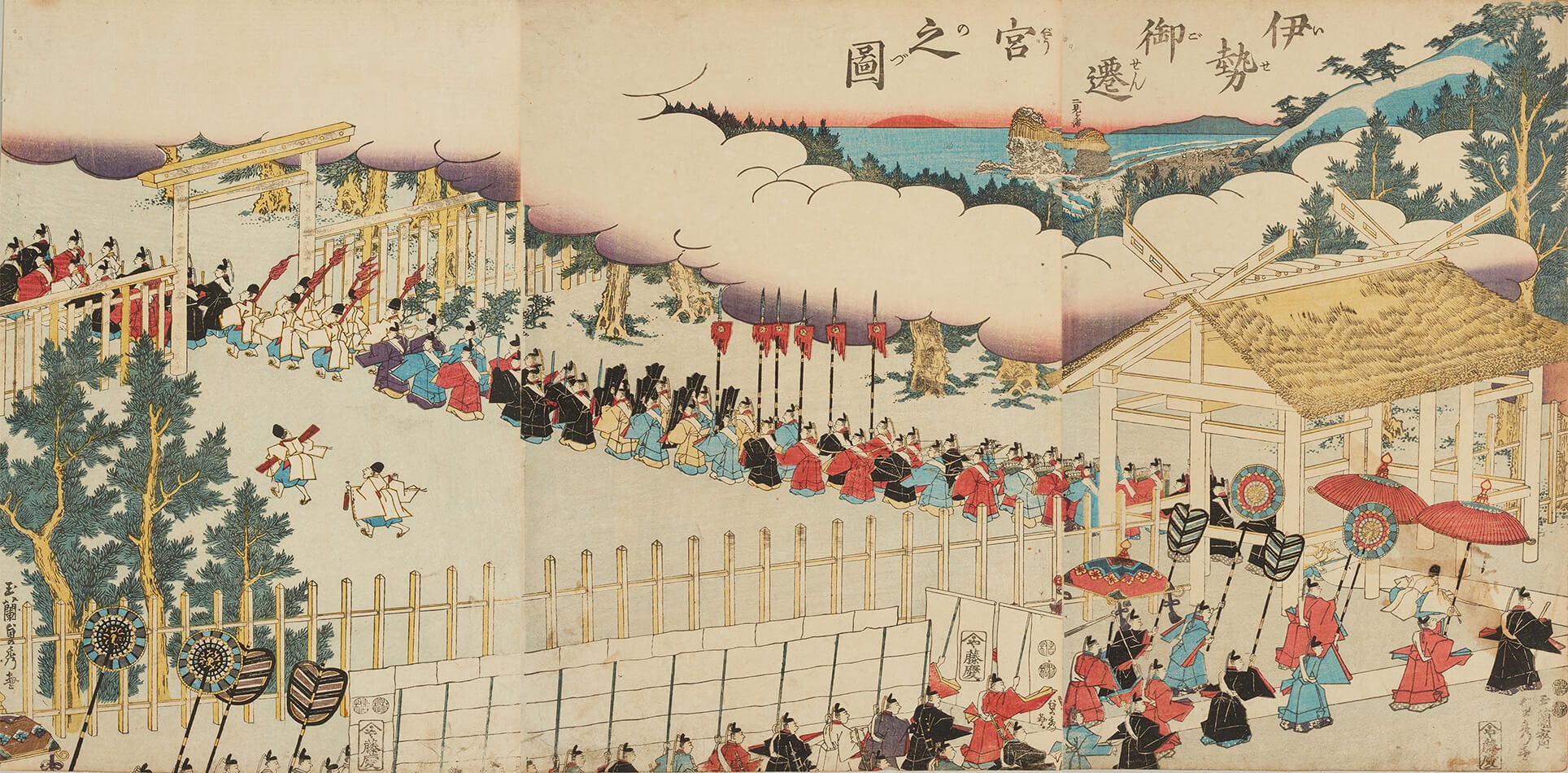
One of the most powerful expressions of this philosophy can be found at Ise Grand Shrine in Japan. Through a tradition known as Shikinen Sengu, with a history spanning some thirteen centuries, the shrine’s principal sanctuaries are traditionally rebuilt every twenty years, and the deities are ceremonially transferred to the new structures.
Shikinen Sengu is usually understood as a religious tradition, and of course, that’s at its heart. But look a little closer, and you’ll find something else: an extraordinarily thoughtful system designed to make continuity possible.
First, the cycle is established. Everyone knows when the next rebuilding will take place. Each generation doesn’t have to start over by deciding whether it should happen at all. The site for the next sanctuary is already waiting beside the current one.
Preparations and ceremonies unfold over roughly eight years. And in the shrine’s forests, Japanese cypress trees are being cultivated for rebuilding projects far beyond the next twenty-year cycle.
There are several theories about why the interval is twenty years. One is the transmission of skills. It’s a span that allows a craftsperson to participate more than once in a lifetime, first learning from others, and later passing that knowledge on.
History also shows us what happens when the systems supporting such a tradition break down. During Japan’s centuries of civil conflict, the funding that had traditionally supported the rebuilding became difficult to secure. The cycle was interrupted for more than a century.
It wasn’t that people had stopped believing. The resources and arrangements needed to turn that belief into action were no longer functioning as they had before.
Buddhist nuns from Keikoin played a remarkable role in reviving the tradition, traveling to gather donations and support. Their efforts, together with contributions from many others, helped make the rebuilding possible again. It was an extraordinary act of devotion, but also the work of reconnecting people, resources, and institutions so that the tradition could continue.
Dedication can help rebuild a broken system. But dedication alone cannot stand in for a functioning system forever.
Shikinen Sengu has endured for so long not only because people believed in it and devoted themselves to it. It has also endured because the practices supporting that devotion have been sustained, restored, and adapted over time.
Renewal is scheduled. Resources are prepared. The passing on of skills is built into the process. Faith and human intention remain at the center, while the structures around them help make continuity possible.
For us, this is part of the essence of TOKOWAKA: keeping what matters alive through change.
Bringing that principle into everyday life requires more than good intentions. It means creating rhythms, securing resources, and defining responsibilities so people can give their best without continually exhausting themselves. It also means being willing to renew those structures when they no longer serve the people and purposes they were meant to support.
Preservation and innovation are not opposing choices. What matters is understanding the essence of what we’ve inherited, allowing it to take new forms in the present, and passing it forward with care.
Tradition is not something we hold still. It’s something we keep alive through the way we live and work today.
And this philosophy extends far beyond architecture. People change. Communities evolve. Societies must learn, adapt, and renew themselves. Continuity doesn’t require remaining the same. It requires knowing what matters enough to carry it through change.
TOKOWAKA, then, is more than the name of a project. It’s a philosophy at the heart of 369meteor, shaping how we think about well-being, community, cultural heritage, and the future we want to build.
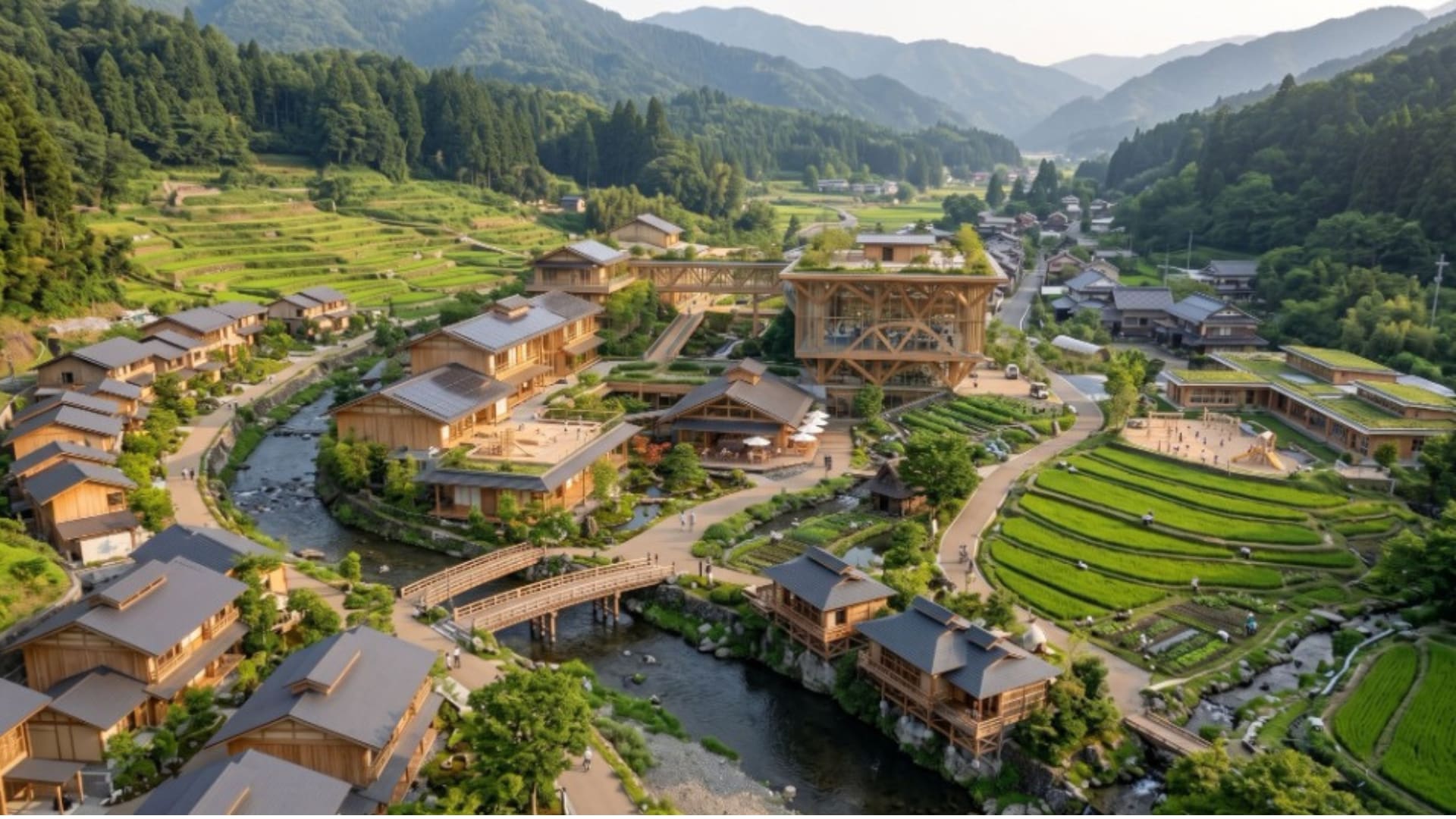
We’re now exploring how to bring that philosophy into everyday life. One expression of it is our vision for an international coliving community rooted in Japan’s traditional architecture.
We want to honor the knowledge and care embedded in these buildings while giving them an active place in contemporary life: places where people live, work, learn, and create, and where the buildings themselves continue to be cared for and renewed.
We imagine local residents and craftspeople working alongside builders from around the world, sharing meals, exchanging knowledge, developing new ventures, and learning through the practice of making and maintaining things together.
We want that initial admiration for a place and its culture to grow into something people can genuinely take part in, and into relationships that endure.
For those relationships to last, they need more than good intentions. They need viable livelihoods and a healthy local economy.
Craftspeople deserve fair compensation for the time and knowledge they share. People learning those skills need time, guidance, and opportunities to practice. The work of maintaining buildings, supporting daily life, and bridging cultures also needs to be recognized and sustained.
We don’t want a model in which visitors simply enjoy the value of a place and move on. For us, it only works if the people who already call that place home genuinely benefit from it too, both culturally and economically.
Long before we arrived, people were working, caring for buildings, maintaining relationships, and carrying local knowledge forward. So our work must begin by listening.
And as we’ve begun listening, one thing has already become clear: there isn’t just one story to hear.
We’ve met a craftsperson who doesn’t necessarily want to train a successor. What matters to this person, as we understood it, is doing their own work with care and integrity for as long as they can. The absence of a successor isn’t necessarily a problem they feel compelled to solve.
Rather than pushing beyond what is sustainable and risking the work and life they have now, they’ve chosen to give their attention to what is in front of them. There’s a quiet dignity in that choice, and we believe it deserves respect.
We’ve also met craftspeople who are already innovating to keep their skills and businesses alive. They’re developing new products, exploring new markets, and finding new ways of teaching. They’re thinking about both preservation and growth, open to collaboration, and actively exploring what comes next.
Their concern often reaches beyond their own businesses. They see the wider community that has nurtured their craft as something living, something whose future matters too.
Then there are craftspeople who want to carry their skills forward and make them better, but lack much of what they need to do so: knowledge of new markets, funding, time, people, and access to new customers.
The willingness is there. What’s missing is often the support, the structures, and the people willing to work alongside them.
When we talk about “traditional craftspeople” as if they were one group with one set of needs, all these differences disappear. Each person has their own relationship with the past and their own hopes for the future. Some may not have any particular vision for what comes after them, and none of these positions is inherently more valid than another.
This brings us back to the question we began with: a contribution is only truly voluntary when declining is a real option. The same principle applies here. Not wanting a successor is also a choice worth respecting.
Our role isn’t to persuade everyone to pursue the same future, but to listen closely and help create the conditions for people to follow the paths they choose—whether that means passing on their craft, exploring new possibilities, or bringing their work to a close.
TOKOWAKA isn’t about preserving everything forever. It’s about respecting people’s freedom to decide what they carry forward, what they change, and what they allow to end.
From Temporary Gatherings to Places We Can Return To
Startup societies have a particular kind of energy. If you’ve spent time at Network School or another pop-up city, you know it well.
People who normally live in different countries and move through different worlds come together for a concentrated period of time. Unexpected friendships form. Ideas take shape. Collaborations begin. There’s freedom in the temporary nature of it all. It allows people to experiment.
But what happens when the gathering ends? What remains of the relationships that were formed? Where does all that energy go?
We want to move from temporary experiments toward relationships and places that can continue growing over time.
That doesn’t mean everyone needs to relocate or commit to a new life immediately. People can arrive, connect, learn, build something together, and return to their own lives. Then come back.
Over time, the relationship between a person and a place can deepen. There are landscapes they want to care for, people they want to see again, conversations and projects they want to continue.
A place gradually becomes more than somewhere they once visited. It becomes somewhere they can return to.
For people who have the freedom to work from almost anywhere, there’s something meaningful about choosing to return to a particular place. It’s a different kind of freedom: not the freedom to keep moving, but the freedom to come back.
And for those who live there year-round, we hope these returning relationships can bring lasting opportunities, friendships, and new possibilities.
Not a cycle of arrival and consumption, but a relationship that grows through repeated encounters. Not simply using a place, but taking part in its continued life.
That’s why we care about the practical questions of economics, operations, and governance. Without them, even the most beautiful vision may remain temporary. With them, perhaps we can begin building something that lasts.
What Are We Really Trying to Build?
When people talk about creating new societies, the conversation often turns to technology, institutions, governance models, and ambitious visions of the future. All of those things matter.
But however sophisticated our systems become, shouldn’t we also ask what kind of life they make possible?
Can people remain connected to themselves? Can they disagree and still stay in conversation? Can they show vulnerability without losing their place? Is someone’s generosity quietly being treated as an unlimited resource?
Do the people who have cared for a place over generations have a meaningful voice in decisions about its future? Are we creating something new without destroying what was already valuable?
We want to keep asking these questions, not because we’ve lost faith in ambitious visions, but because we want those visions to survive contact with everyday life.
And there’s another question underneath all of this.
What are we building for in the first place?
We live in a time when we can create more things, faster, than ever before. New technologies, services, economies, communities, even new societies.
But in the rush to build, is it possible to lose sight of why we started? What did we care about? What were we trying to protect, or pass on to those who come after us? What kind of life did we actually want to live?
Is the future we’re building a world we ourselves would want to live in?
If we forget to ask those questions, we can keep building faster, bigger, and more efficiently. But does that necessarily bring us any closer to a better world?
At the heart of what we want to create through TOKOWAKA is a simple wish: a place where people can remember what matters.
Not a place that tells people what should matter to them. Not a retreat into the past, or somewhere Japanese culture is simply presented to others as something to admire.
A place where people have room to reconnect with things that can quietly slip out of view amid busy lives and the constant pressure to achieve.
Their own sense of what feels right. The experience of connecting deeply with another person. Being in nature and noticing the seasons change. Taking pride in the work in front of them. Making something with their hands for someone else. Enjoying time when nothing needs to be accomplished.
Sometimes it’s through these ordinary moments that we recognize what has mattered to us all along.
We return to the image of the swordsmith: someone giving his full attention to the work before him, thinking of the person who will receive it and of the lives that may be touched by it. And behind him are people making that work possible.
Our lives are full of such connections. The things we make, the places we maintain, the meals we prepare, the words we offer one another. Someone else’s life continues on the other side of those small acts. And our own lives are made possible by the work and care of countless people who came before us.
To live fully as ourselves while remaining connected to others and to the world around us is deeply connected to what well-being means to us.
It’s not simply about feeling better or maintaining a healthy body and mind. It’s about feeling that your life is truly your own, and that it belongs to something larger without requiring you to lose yourself.
Having people and places that help you come home to yourself. Having something meaningful to create, care for, and pass on.
We want TOKOWAKA to be a place where these things can become part of everyday life. Sharing a table, talking with people from different cultures, working alongside craftspeople, making tea and enjoying a quiet moment, spending time in nature and reconnecting with your own senses.
Then carrying something from those experiences back into your own work and life.
Not a place that gives people the answer to what they should build, but one that gives them room to ask the question for themselves. Not simply somewhere to stop, but somewhere to remember what we’re moving toward, and why.
That’s the TOKOWAKA we want to create.
And if we want that vision to become more than a beautiful idea, we need to build the structures that can sustain it. Respect must become relationships, those relationships must support work that can continue, and that work must become something worth passing on.
What Comes Next
Zō Village gave us more than we could have anticipated. We learned a great deal, met people who became deeply important to us, and experienced both the joy and the difficulty of building a community together. We’re deeply grateful to everyone who made it possible.
The relationships we formed, the moments we shared, and the challenges we faced are all part of what we carry forward.
We’re now moving on from our role as organizers of Zō Village to focus on our next chapter: TOKOWAKA. We’re bringing everything we’ve learned, everything we’ve come to value more deeply, and the questions we haven’t yet answered. This time, we’re building from the ground up, guided by our own philosophy.
In many ways, what comes next will be our true V1.
We don’t expect to get everything right from the beginning. We’ll experiment, learn, and keep shaping what we build alongside the people who become part of it. What matters isn’t having the perfect model from day one, but knowing what we care about and staying true to it as we grow.
We’re already taking the first steps toward making TOKOWAKA a reality. And we don’t want to build it alone, or simply invite people into something we’ve already designed. We want to create it together with those who share our vision, bringing different perspectives, skills, and experiences into something none of us could build alone.
Not by holding the world still, but by keeping what matters alive through change.
And just as importantly, we want to create a place where people can remember what truly matters and find their way back to themselves. Perhaps that’s what it really means to belong.
That’s the heart of TOKOWAKA, and the work we’ve already begun.
Ryu and Seiko | 369meteor
Honor, continuity, tradition, optionality, freedom, respect, voice.
You two are a beacon and an important bridge between Japan and the rest of the world for this movement.
I am very excited to see how Tokowaka grows, and how you realize this vision of community.
As someone who is creating an online community, I appreciate this thoughtful assessment of what makes a thriving community, including the responsibilities and opportunities. Thank you. 🪷